


Pydroid 3 - IDE for Python 3
Kategorie : AusbildungVersion: 7.4_arm64
Größe:74.9 MBBetriebssystem : Android 6.0+
Entwickler:IIEC
 Herunterladen
 Erleben Sie die Leistungsfähigkeit von Python 3 auf Android mit Pydroid 3, der benutzerfreundlichsten und umfassendsten Python 3-IDE, die bei Google Play verfügbar ist.
Hauptfunktionen:
- Offline-Python-3-Interpreter: Führen Sie Python-Programme ohne Internetverbindung aus.
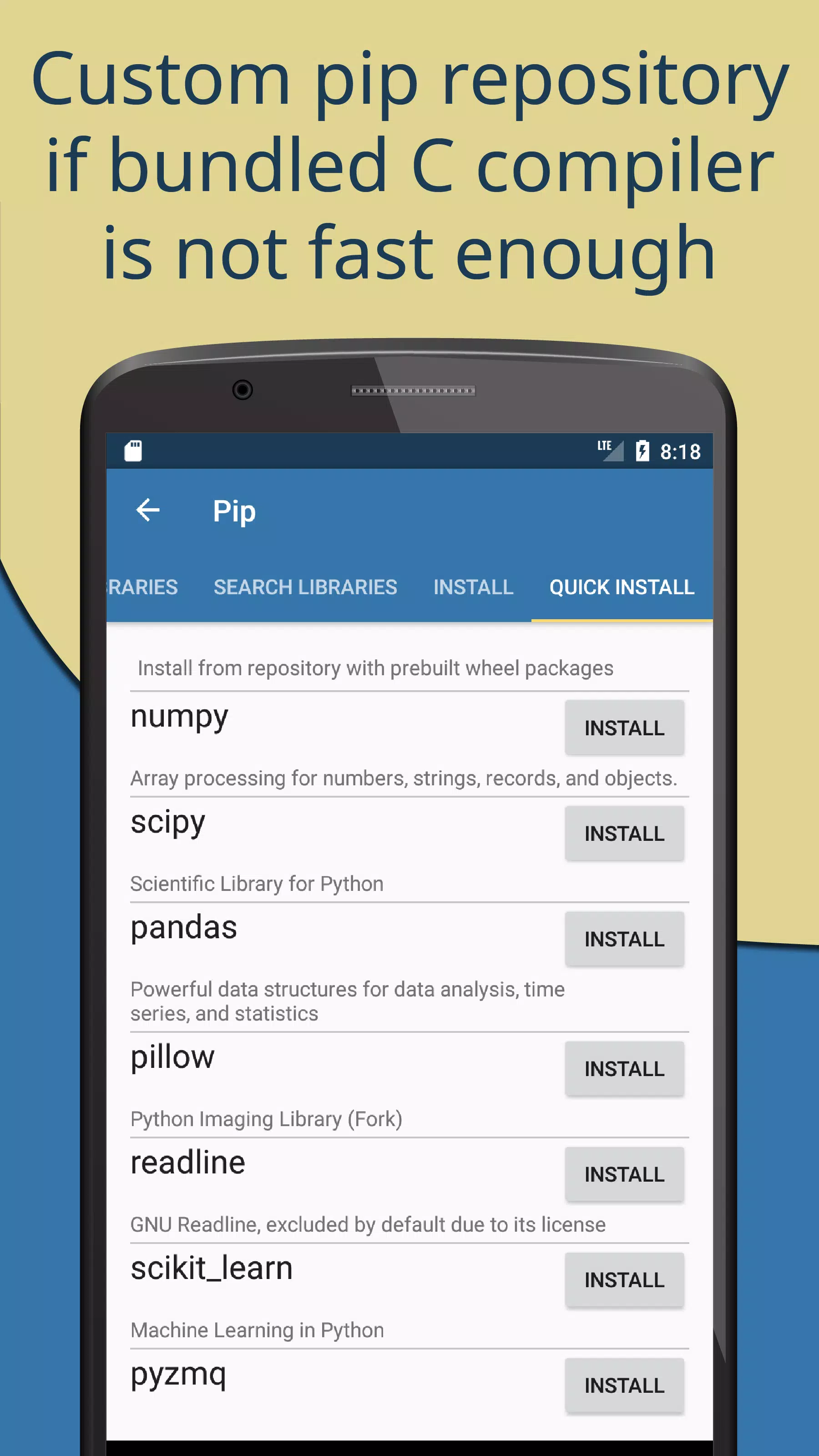
- Pip Package Manager und benutzerdefiniertes Repository: Greifen Sie dank eines benutzerdefinierten Repositorys mit vorgefertigten Rädern auf eine breite Palette von Bibliotheken zu, darunter wissenschaftliche Pakete wie NumPy, SciPy, Matplotlib, scikit-learn und Jupyter Pakete.
- Erweiterte wissenschaftliche Bibliotheken: Enthält OpenCV (auf Geräten mit Camera2-API-Unterstützung), TensorFlow und PyTorch (Premium-Version).
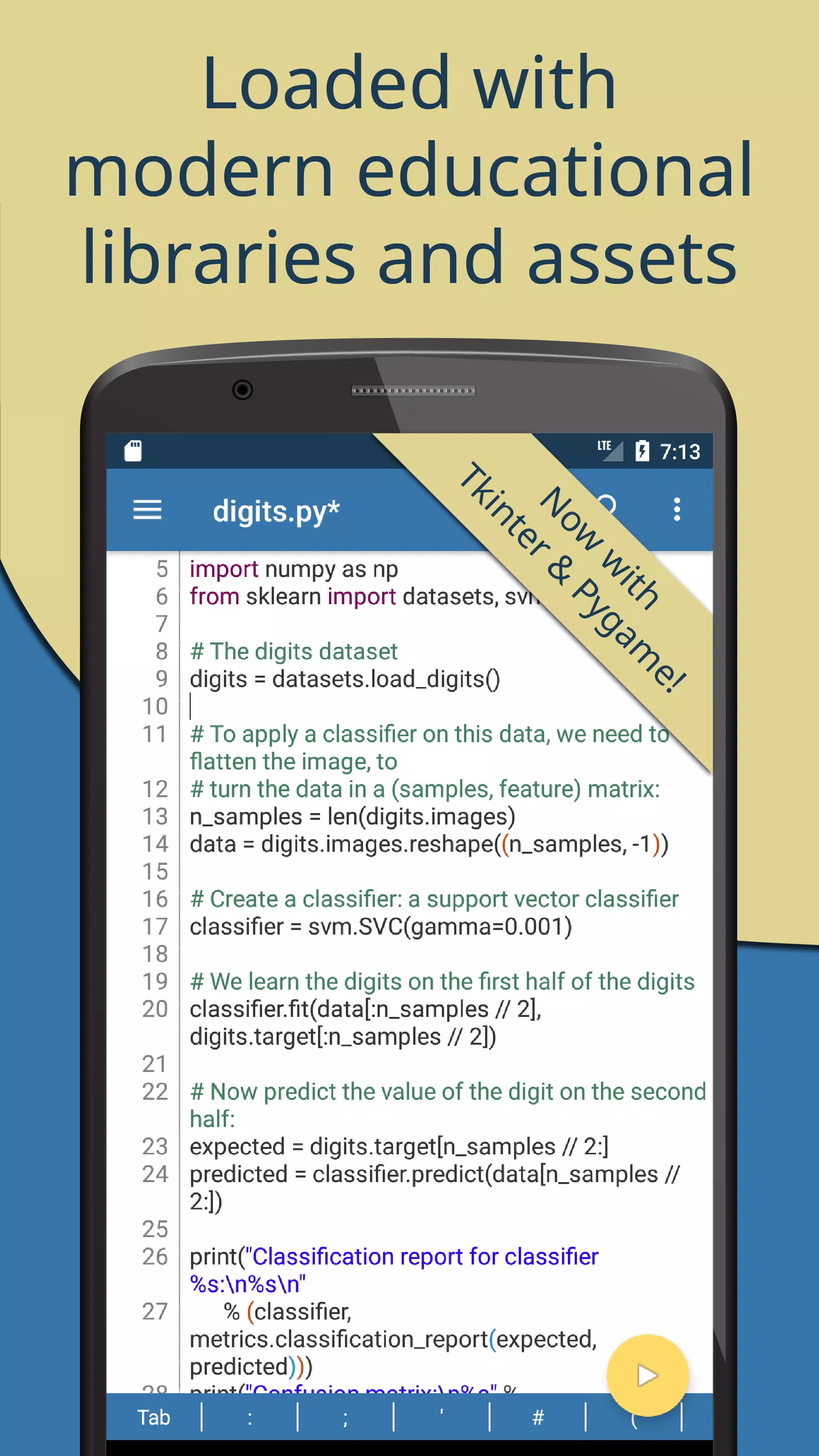
- GUI-Unterstützung: Vollständige Tkinter-Unterstützung für die Erstellung grafischer Benutzeroberflächen.
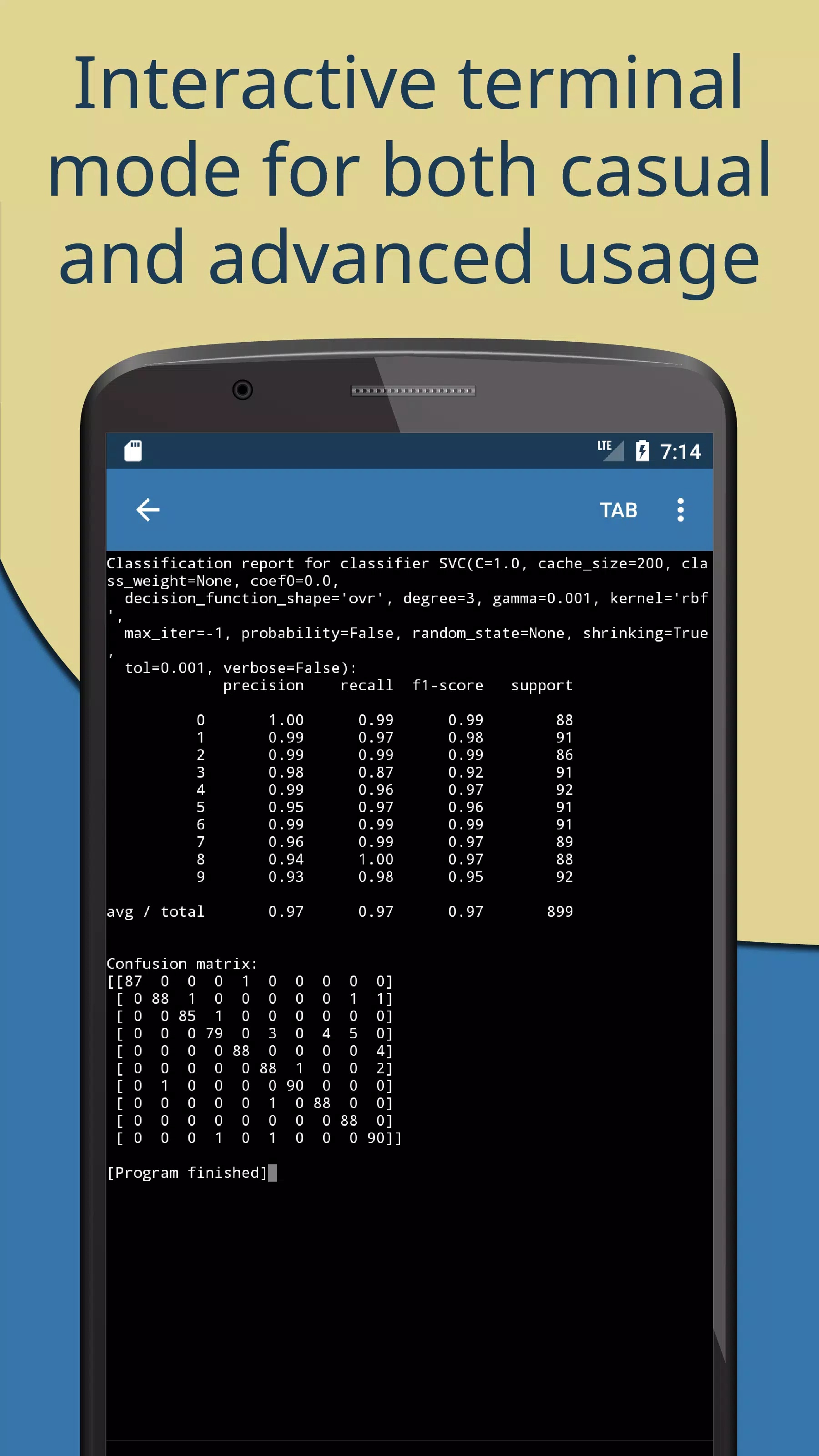
- Terminal-Emulator: Ein voll ausgestatteter Terminal-Emulator mit Readline-Unterstützung (verfügbar über Pip).
- Eingebaute Compiler: Kompilieren Sie C-, C- und Fortran-Code direkt in der IDE und ermöglichen Sie so die Erstellung von Bibliotheken aus Pip, auch solchen mit nativen Codeabhängigkeiten.
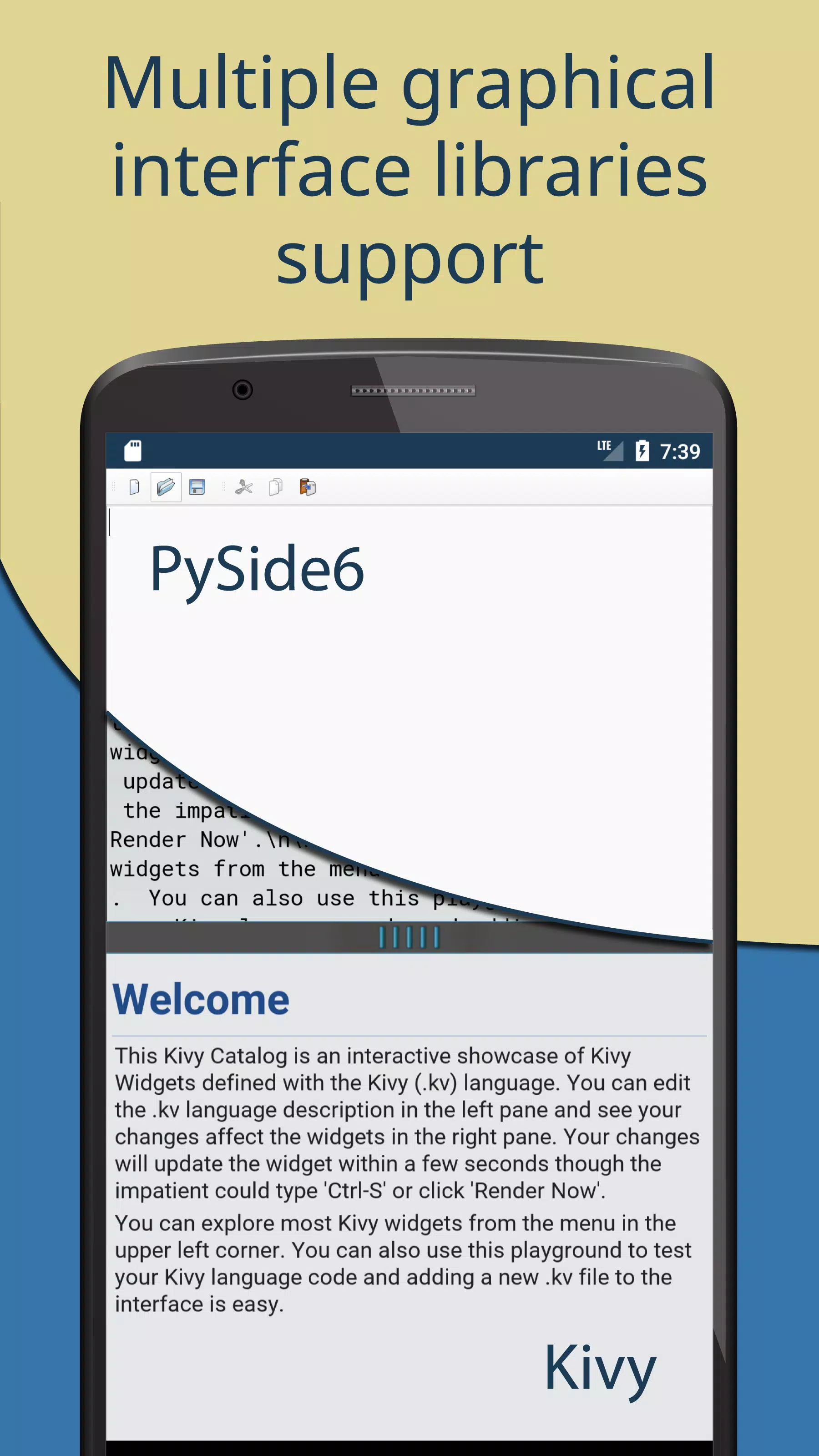
- Erweiterte Entwicklungstools: Beinhaltet Cython-Unterstützung, einen PDB-Debugger mit Haltepunkten und Überwachungen sowie Unterstützung für die grafische Kivy-Bibliothek mit einem SDL2-Backend. PySide6-Unterstützung (einschließlich Matplotlib PySide6-Unterstützung) und Matplotlib Kivy-Unterstützung sind im Quick Install-Repository verfügbar. Unterstützung für Pygame 2 ist ebenfalls enthalten.
- Intuitiver Editor: Bietet Codevorhersage, automatische Einrückung, Echtzeit-Codeanalyse, eine spezielle Tastatur, Syntaxhervorhebung mit anpassbaren Themen, Registerkarten und verbesserte Codenavigation. Eine One-Click-Freigabe an Pastebin ist ebenfalls möglich.
Premium-Funktionen:
Bestimmte erweiterte Funktionen, die in der Originalbeschreibung mit einem Sternchen (*) gekennzeichnet sind, sind nur in der Premium-Version verfügbar. Dazu gehören erweiterte Funktionen zur Codevorhersage und -analyse.
Erste Schritte:
Pydroid 3 erfordert mindestens 250 MB kostenloses Internal storage, wobei 300 MB empfohlen werden, insbesondere wenn größere Bibliotheken wie SciPy verwendet werden. Das Debuggen erfolgt durch das Setzen von Haltepunkten durch Klicken auf die Zeilennummer. Bestimmte Bibliotheken wie Kivy, PySide6, SDL2, Tkinter und Pygame werden automatisch durch spezifische Importanweisungen oder spezielle Kommentare (z. B. „#Pydroid run kivy“) erkannt. Verwenden Sie „#Pydroid run terminal“, um den Terminalmodus zu erzwingen, besonders nützlich bei Matplotlib.
Bibliotheksverfügbarkeit:
Einige Bibliotheken sind aufgrund der Komplexität ihrer Portierung nur Premium-Bibliotheken. Die Entwickler sind offen für Kooperationen, um die kostenlose Bibliotheksunterstützung zu erweitern.
Rechtliche Informationen:
Bestimmte Binärdateien innerhalb der Pydroid 3 APK sind unter (L)GPL lizenziert. Kontaktieren Sie die Entwickler für den Quellcode. GPL-reine Python-Bibliotheken gelten als bereits in Quellcodeform vorliegend. Pydroid 3enthält nicht automatisch GPL-lizenzierte native Module.
Beispielcode:
Der enthaltene Beispielcode ist für Bildungszwecke kostenlos, darf jedoch nicht ohne Genehmigung in Konkurrenzprodukten verwendet werden.
Android-Marke:
Android ist eine Marke von Google Inc.




Tron und Tron: Legacy 4K Steelbooks wieder auf Lager – aber wahrscheinlich nicht für lange

Sony prüft Preiserhöhungen angesichts von Zollbelastungen
- Xbox Game Pass Gains with Indiana Jones and Call of Duty; Hardware Sales Dip Microsoft’s Xbox division continues to see strong momentum in its subscription service, Xbox Game Pass, driven by high-profile title additions like Indiana Jones and the Great Circle and Call of Duty: Black Ops 6, but hardware sales have dipped slightly in the latest quarterly report. Game Pass Thrives on Major Acquisitions The launch of Indiana Jones and the Great Circle—a long-awaited adventure game developed by MachineGames and published by Bethesda—has been a standout for Game Pass. The title, which debuted on Xbox consoles and PC, has drawn massive player interest, significantly boosting Game Pass engagement. Its inclusion in the service has not only attracted new subscribers but also increased retention rates, according to Microsoft’s internal metrics. Equally impactful is the continued presence of the Call of Duty franchise on Game Pass. With Call of Duty: Black Ops 6 launching as a Game Pass Exclusive on Xbox and PC, the service has become a go-to platform for fans of the franchise. This exclusivity has driven a notable spike in new Game Pass signups, particularly among core gamers and first-party enthusiasts. Microsoft has emphasized that Game Pass now boasts over 35 million subscribers globally, with growth fueled by exclusive and high-quality titles. The service’s value proposition—access to a large library of games for a low monthly fee—has become increasingly compelling in a market where consumers are prioritizing content over hardware. Hardware Sales Dip Amid Shift to Subscription Model Despite Game Pass success, Xbox hardware sales saw a modest decline in the most recent fiscal quarter. Microsoft attributed the dip to a combination of factors: Supply chain adjustments and reduced console inventory following the end-of-life for the Xbox Series X/S refresh cycle. Consumer preference shift toward software and subscriptions over new hardware purchases, especially with the rise of Game Pass and cloud gaming (via Xbox Cloud Gaming). Market saturation, particularly in regions where most gamers already own an Xbox console. The dip in hardware sales was more pronounced in North America and Europe, while emerging markets like India and Southeast Asia showed more moderate declines, suggesting regional differences in purchasing behavior. Strategic Pivot to Services Microsoft’s leadership, including CEO Satya Nadella, has reiterated the company’s long-term strategy to transition from hardware-centric growth to a services-first model. The success of Game Pass underscores this shift—subscription revenue now accounts for a growing share of Xbox’s overall earnings, and the company is investing heavily in first-party studios and exclusive content. In a recent earnings call, Microsoft noted that Xbox’s service revenue grew 18% year-over-year, outpacing hardware sales, which declined by 7%. The company expects Game Pass to surpass 40 million subscribers by the end of 2025. What’s Next? With Indiana Jones and the Great Circle receiving strong critical acclaim and Call of Duty: Black Ops 6 expected to drive continued engagement, Xbox is well-positioned to expand its game subscription base. Meanwhile, Microsoft is expected to unveil new hardware later in 2025, possibly including a redesigned Series X/S or a next-gen console codenamed “Titan.” In summary: While Xbox hardware sales dipped, the expansion of Game Pass—powered by major exclusives like Indiana Jones and Call of Duty—is proving to be a transformative force. As Microsoft pivots toward a subscription-driven future, the focus is clearly shifting from consoles to content, ensuring long-term relevance in a competitive gaming landscape. Vor 1 Tagen
- Holen Sie sich Oktober's bescheidene Wahl für nur 10 Dollar (begrenzte Zeit) Vor 2 Tagen
- Capcap Absagt Vortrag zur Optimierung von Monster Hunter Wilds wegen Belästigungsbedenken Vor 3 Tagen
- Jugend verpasst den wichtigsten Jahresdeal von Prime Vor 3 Tagen
- Boxville-Entwickler veröffentlichen Demo für „Rabbit's Hop", ihr neues Puzzlespiel Vor 5 Tagen
- Hutch von Matchcreek startet ein Drei-Gleiche-Spiel Vor 1 Wochen
- Tower of God: Neue Welt begrüßt Alphine und Kaiser Vor 1 Wochen
- Mai Shiranui tritt dem King-of-Fighters-AFK-Kader bei Vor 1 Wochen
- Siegesschirm: Ein WWII-RTS-/Dritt-Personen-Shooter-Hybrid für PC angekündigt Vor 1 Wochen
-

Mode Lifestyle / 3.17.0 / 10.52M
Herunterladen -

Personalisierung / 1.0.0 / by DigitalPowerDEV / 11.10M
Herunterladen -

Werkzeuge / 9.9.7 / 130.54M
Herunterladen -

Mode Lifestyle / 1.5 / by BetterPlace Safety Solutions Pvt Ltd / 9.60M
Herunterladen -

Videoplayer und Editoren / v1.02 / by TateSAV / 13.80M
Herunterladen -

Mode Lifestyle / 13.1 / 5.66M
Herunterladen -
Business Office / 2.8 / 10.16M
Herunterladen -

Mode Lifestyle / v2.3.0 / by iMyFone / 26.39M
Herunterladen
-
 Alle Passwörter und Vorhängeschlosskombinationen in Lost Records: Bloom and Rage
-
 30 beste Mods für die Sims 2
-
 Bestes Android PS1 Emulator – Welchen PlayStation-Emulator sollte ich verwenden?
-
 Durchgesickertes Filmmaterial enthüllt mythisches Epos: Black Myth: Wukong
-
 Termine und Zeitplan der Tokyo Game Show 2024: Alles, was wir bisher wissen
-
 Android begrüßt das Spiel im „Dynasty Legends“-Stil, „Otherworld Three Kingdoms“