Дом >  Новости >  Руководство по проекту Дарт Гоблина в Clash Royale

Руководство по проекту Дарт Гоблина в Clash Royale

Authore: LilyОбновлять:Jan 11,2025

Быстрые ссылки

В Clash Royale началась новая неделя, а также новое событие: Драфт эволюции гоблинов-дротиков. Мероприятие стартует 6 января и продлится одну неделю.

Supercell недавно выпустила усовершенствованную версию Дарт Гоблина, поэтому, как и ожидалось, именно этому будет посвящено данное мероприятие. В этом руководстве мы расскажем все, что вам нужно знать о проекте эволюции Дарт-гоблина, чтобы вы могли получить от него максимальную пользу.

Как работает драфт эволюции Дарт-гоблина в Clash Royale
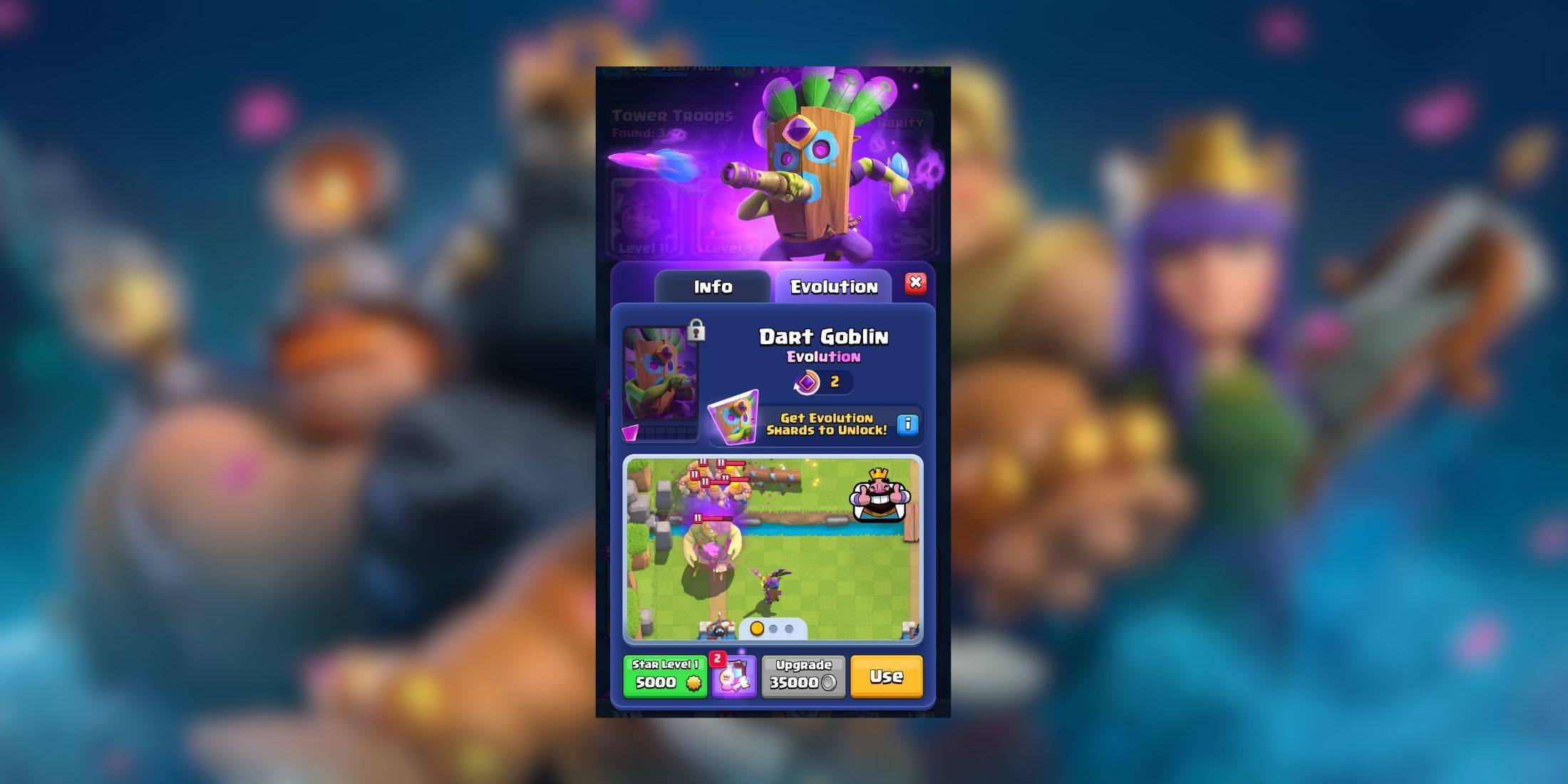
Эволюция Дарт-Гоблина наконец-то здесь, и, как и эволюция Гигантского Снежка, Supercell позволяет игрокам Clash Royale опробовать карты эволюции в драфте. Мы все знаем, насколько силен Дарт Гоблин, и теперь, благодаря его обновленной версии, он стал еще мощнее.

Развитая версия Гоблина-дротика очень похожа на обычную версию с точки зрения атрибутов. У него такое же здоровье, урон, скорость атаки и дальность действия. Но что делает его таким мощным, так это его способность отравлять. Каждый дротик, который он бросает, распространяет яд по целевой области, что делает его очень полезным против групповых отрядов или даже танков, таких как Гигант. Например, он легко справится с продвижением великанов и ведьм. Иногда это может принести вам чрезвычайно высокий обмен эликсира.

Другими словами, хотя развитый Дарт Гоблин и силен, сам по себе его выбор не гарантирует вам победу. Вот несколько советов, которые помогут игрокам доминировать в драфте «Дарт Гоблин Эволюция».

Как выиграть драфт «Эволюция Дарт Гоблина» в Clash Royale

Во время драфта «Эволюция дротик-гоблина» игроки могут использовать развитого дротик-гоблина, даже если они еще не разблокировали его. Как и в случае с другими шашками, вам не придется приносить свою колоду. Вместо этого игроки должны собирать колоду на месте для каждой игры. Игра дает вам на выбор две карты, и вам нужно выбрать одну для своей колоды. Другой игрок получает карту, которую вы не выбирали. Это происходит четыре раза с обеих сторон, поэтому вам нужно тщательно подумать о том, что лучше для вашей колоды и что может помочь вашему противнику.

Эти карты могут быть любыми: от воздушных юнитов, таких как Феникс и Адский дракон, до более крупных юнитов, таких как штурмовые солдаты, принцы и П.Е.К.К.А. Как и ожидалось, составление колоды может быть немного сложным, но если вы получите основную карту на раннем этапе, постарайтесь выбрать для нее хорошие карты поддержки.

Один из них получит развитого Гоблина-дротика, а другой может получить такие карты, как развитая Девушка-фейерверк или развитая Летучая мышь. Не забудьте выбрать мощную спелл-карту для этого события. Такие заклинания, как «Дождь стрел», «Яд» или «Огненный шар», могут уничтожить гоблинов-дротиков и многие воздушные юниты, такие как нежить и драконы-скелеты, нанося при этом огромный урон вражеским башням.


Последние новости
Warhammer 40K Animated Universe: Exploring the Grim Darkness
Warhammer 40,000—commonly known as Warhammer 40K—is a dark, dystopian science fantasy universe created by Games Workshop in 1987. Set in the 41st millennium, it presents a galaxy ravaged by eternal war, ruled by a god-king, and teetering on the edge of annihilation. The setting is often summarized by the famous phrase:

Warhammer 40K Animated Universe: Exploring the Grim Darkness Warhammer 40,000—commonly known as Warhammer 40K—is a dark, dystopian science fantasy universe created by Games Workshop in 1987. Set in the 41st millennium, it presents a galaxy ravaged by eternal war, ruled by a god-king, and teetering on the edge of annihilation. The setting is often summarized by the famous phrase: "In the grim darkness of the far future, there is only war." While Warhammer 40K has long been dominated by tabletop wargaming, novels, and miniatures, a growing interest in animated adaptations has sparked dreams of a full-fledged animated universe. Here’s a deep dive into what such a Warhammer 40K Animated Universe could look like—its tone, themes, potential storylines, and why it's both a challenge and a triumph waiting to happen. 🌌 The Tone: A Grim, Gritty, and Mythic Canvas The animated version would not be a superhero saga or a space opera with happy endings. It would be visceral, brutal, and philosophical, blending: Cinematic grandeur (think Dune meets Blade Runner meets Mad Max: Fury Road). Religious fanaticism and cosmic horror (Lovecraftian elements fused with Catholic iconography and Nazi aesthetics). Existential dread and the futility of resistance against an all-consuming fate. Every frame would be saturated in shadow, rust, blood, and fire. The camera would glide over war-torn cities, bone-choked battlefields, and the endless corridors of a dying Imperium. 🐉 Key Factions (Animated Series Explorations) Each major faction could be the focus of a standalone animated series or arc within a larger anthology: 1. The Imperium of Man – The Emperor’s Shadow Tone: Epic tragedy, political intrigue, religious zeal. Plot: Follow a young Imperial Guard officer who discovers a secret heresy within the Ecclesiarchy. As the Emperor’s inhuman rule is revealed through fragmented visions, he must choose between blind obedience and revolution. Visual Style: Baroque grandeur meets industrial decay—massive cathedral-like warships, chanting legions, and stained-glass windows made of alien skulls. 2. Space Marines – Blood and Iron Tone: Heroic tragedy, brotherhood, and madness. Plot: A chapter of Primaris Space Marines is sent to a rogue world to reclaim a lost planet. As they battle daemons, traitors, and their own deteriorating sanity, they confront the truth: the Emperor may have been a false god. Visual Style: Hyper-detailed armor, slow-motion combat, and bursts of psychic flame. Think 300 meets Children of Dune, but with more chains, bolts, and screaming. 3. Orks – War-Born: The Green Tide Tone: Chaotic, absurd, yet oddly poetic. Plot: An Ork WAAAGH! erupts across a dying galaxy, not from malice—but from a strange, psychic force that draws them together in a final, unstoppable surge. A single Ork boy with "weird" instincts becomes the unlikely prophet of this chaotic apocalypse. Visual Style: Vibrant colors, stop-motion textures, and surreal dream logic. Imagine Mortal Kombat meets The NeverEnding Story in a world where everything is made of scrap metal and rage. 4. Chaos – The Screaming Void Tone: Psychological horror, body horror, and mythic descent. Plot: A traitor Warmaster, once a hero, is consumed by Chaos. His descent into madness is told through fragmented dream sequences, where he battles his past self, his dead comrades, and the daemonic gods that whisper in his blood. Visual Style: Surreal landscapes, melting faces, and time-reversing battles. Inspired by Pan’s Labyrinth, The Thing, and Jacob’s Ladder. 5. Tyranids – The Hive Mind’s Hunger Tone: Cosmic horror, inevitability, existential terror. Plot: An alien hive mind that consumes entire planets, not out of hatred, but because it must. Through the eyes of a single xenos scout (a captured human or a dying Genestealer), we witness the Hive Mind not as evil—but as a natural force, like a storm. Visual Style: Organic grotesquerie, pulsating flesh, biomechanical designs, and overwhelming scale. Think Annihilation meets Alien. 6. Eldar – The Weave of Fate Tone: Tragedy, beauty, and decay. Plot: A reclusive Eldar Farseer, cursed by the Weave, tries to stop a vision of the galaxy’s end. But every action she takes only accelerates the apocalypse. The Eldar are not gods—they are ghosts of a dead future. Visual Style: Ethereal lighting, ancient ruins, and haunting music. A melancholy ballet of beauty and destruction. 🎮 Why an Animated Universe Makes Sense Visual Flexibility: 40K is built for animation. The grotesque, the alien, the godlike—all are visual feast. Animation can realize impossible machines, psychic battles, and daemonic horrors that live beyond live-action budgets. Narrative Freedom: Unlike live-action, animation can leap across time and space, flash between multiple timelines, and depict the sheer scale of a galaxy at war. Global Appeal: Animated series can reach younger audiences (with age-rated content) and adult fans alike—like Star Wars: The Clone Wars or The Witcher. 🎥 Potential Animated Series: "The 41st Century Cycle" A multi-season animated anthology series, each season focusing on a different faction, with crossover events. Season 1: The Emperor’s Shadow – Imperium Season 2: WAAAGH! – The Green Tide – Orks Season 3: The Screaming Void – Chaos Season 4: Hive Mind’s Hunger – Tyranids Season 5: The Weave of Fate – Eldar Season 6: The Last Crusade – Crossover finale. The galaxy burns. The Emperor is dead. The Imperium fractures. The Orks rise. The Chaos Gods howl. The Tyranids descend. Only one force remains: the Adeptus Mechanicus, seeking to rebuild the galaxy from the ashes. 🔥 Challenges and Controversies Tone: Balancing grimness with storytelling appeal. Too much darkness may alienate viewers; too much hope undermines the core theme. Fan Backlash: Purists may object to animation over traditional miniatures or novels. Censorship: The extreme violence, gore, and disturbing imagery may require heavy editing for global distribution. But if handled with care—by visionary creators like Denis Villeneuve, Juanjo Guarnido (The Sandman), or David Fincher—the animated 40K universe could become a landmark in genre storytelling. ✨ Final Thought: The Grim Darkness as Art Warhammer 40K is more than war. It's a mythos about humanity’s hubris, the illusion of order, and the eternal struggle against oblivion. An animated universe could turn that grim darkness into something transcendent—a dark symphony of war, faith, and despair, where every explosion is a prayer, and every death a testament to a universe that refuses to end. "Not in war, but in the stillness between bullets, do we find truth." — Anonymous, 41st Millennium 🔔 Will it happen? Not yet. But with the success of Dune: Part Two, The Wheel of Time, and The Lord of the Rings: The Rings of Power, the timing may be right. The Grim Darkness is waiting... And animation may finally give it a voice. 🎬 Stay in the shadows. The war has only just begun.

It seems there might be some confusion or a mix-up in the title you've provided:

It seems there might be some confusion or a mix-up in the title you've provided: "Barbarian's Gillett to Helm Resident Evil Reboot". Let's break it down and clarify. 1. "Barbarian's Gillett" There is no known character named "Barbarian's Gillett" in any official Resident Evil (Biohazard) franchise. "Gillett" may be a misspelling or confusion with Barry Burton, a long-time character in the Resident Evil series (especially in the mainline games and the Netflix series). Alternatively, "Gillett" might be a reference to a lesser-known or fan-made character, but it does not appear in any official Resident Evil canon. 2. "Helm" "Helm" is not a known character in the Resident Evil universe. However, "Helm" could be a misremembered name — perhaps you meant "Helm" as in "Helm of the Umbrella Corporation"? But that’s not a canonical figure either. Another possibility: "Helm" might be a reference to Dr. William Birkin, who was involved in the creation of the T-Virus, but he’s not called Helm. 3. "Resident Evil Reboot" The term "reboot" could refer to the 2002 Resident Evil film (also known as Resident Evil: The Uprising) or more likely, the 2015 reboot film directed by M. J. Bassett, which reimagined the story with a new cast and darker tone. The 2015 reboot film did feature a different version of Chris Redfield, played by Mandy Moore (though she was actually the second lead, not the main). Wait — correction: the 2015 Resident Evil reboot film, titled Resident Evil: Welcome to Raccoon City, stars Lauren Cohan as Alice (though Alice is a major character from the 2002–2007 film series), and Humble B., not a "Gillett" or "Helm." Possible Clarifications: If you meant Barry Burton (a veteran of the S.T.A.R.S. team), he was portrayed in the 2002 film and later in the Netflix series Resident Evil (2022), where he’s played by Paul Weller. If you’re referring to a fan theory, fan fiction, or a parody, then "Barbarian's Gillett to Helm" might be a creative or humorous title — but not from official media. Conclusion: There is no official character named "Barbarian's Gillett" or "Helm" in the Resident Evil universe. The title you mentioned does not correspond to any real event, character, or reboot in the franchise. If you meant: Barry Burton → Yes, a canon character. The 2015 reboot film → Yes, it's a reboot, but no "Gillett" or "Helm" in it. A fan-made story or concept → Possibly, but not part of official lore. Let me know if you’d like help finding a character you’re thinking of, or if you meant a different name (e.g., "Gilbert", "Birkin", "Helm", "Hawke", etc.).