

Between studio shutdowns, workforce reductions, and shrinking investments, the gaming industry has undoubtedly faced significant challenges. Enrique Fuentes, CEO and co-founder of Teravision Games, experienced this turbulence firsthand following their release of Killer Klowns From Outer Space - an asymmetrical horror title based on the cult 1980s film. While earning positive reviews (including a 7/10 from IGN praising its faithful adaptation) and generating strong trailer views, the team soon encountered industry-wide difficulties securing new projects.
"2024 proved exceptionally challenging across the industry. Securing our next project took far longer than anticipated," Fuentes explains. Despite their portfolio featuring collaborations with Disney, Nickelodeon, and Xbox, Teravision struggled to find follow-up work post-Killer Klowns. With limited options, the veteran team - boasting two decades of industry experience - made a strategic pivot: developing within Fortnite's creative ecosystem. Within twelve months, they've launched three Unreal Engine for Fortnite (UEFN) titles, with their fourth releasing today leveraging The Walking Dead's official UEFN content pack.

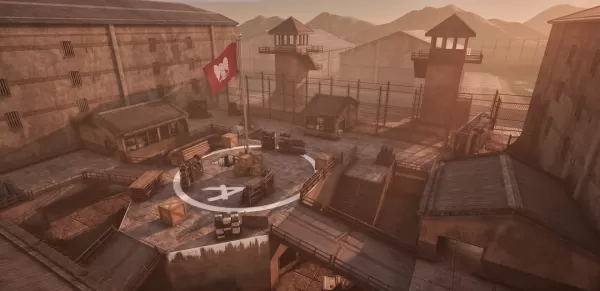
Developed alongside Skybound Entertainment (co-founded by Walking Dead creator Robert Kirkman), Courtyard King represents Teravision's latest UEFN venture - a King of the Hill-style PvPvE experience set within the franchise's iconic prison location. Players battle opponents and NPC walkers using authentic character models including Rick Grimes, Negan, and Daryl Dixon. Beyond asset utilization, Teravision collaborated directly with Skybound's writing team for narrative development.
"Unlike multi-year productions like Killer Klowns, these are projects we can deliver in weeks or months," Fuentes notes regarding their transition to UEFN development. "We'd experimented with UEFN previously, but never anticipated it would become our avenue for partnerships with companies like Skybound. User-generated content represents gaming's current frontier."
Fortnite's UEFN framework provides professional studios unprecedented creative flexibility while mitigating financial risk. Teravision's initial experiment, Havoc Hotel, evolved into a successful roguelike shooter series - with Havoc Hotel 3 consistently ranking among Fortnite's top experiences.

Game designer Martin Rodriguez highlights their smooth transition from Unreal Engine to UEFN's streamlined workflow: "The simplified systems allow greater focus on creative innovation rather than technical overhead." Creative director LD Zambrano notes fundamental design differences in UEFN projects: "We're designing organic social contexts rather than traditional competitive structures - more akin to schoolyard games than conventional multiplayer."
Courtyard King exemplifies this philosophy with its infinitely looping matches featuring fluid team switching - intentionally mirroring The Walking Dead's themes of shifting alliances. For Fuentes, UEFN represents a paradigm shift: "We've proven an 80-person studio can operate sustainably through rapid iteration cycles rather than multi-year gambles. For creative indies with strong market awareness, this model offers unprecedented viability."
Through strategic adaptation, Teravision demonstrates how professional studios can thrive amidst industry challenges by embracing emergent platforms and innovative development models.